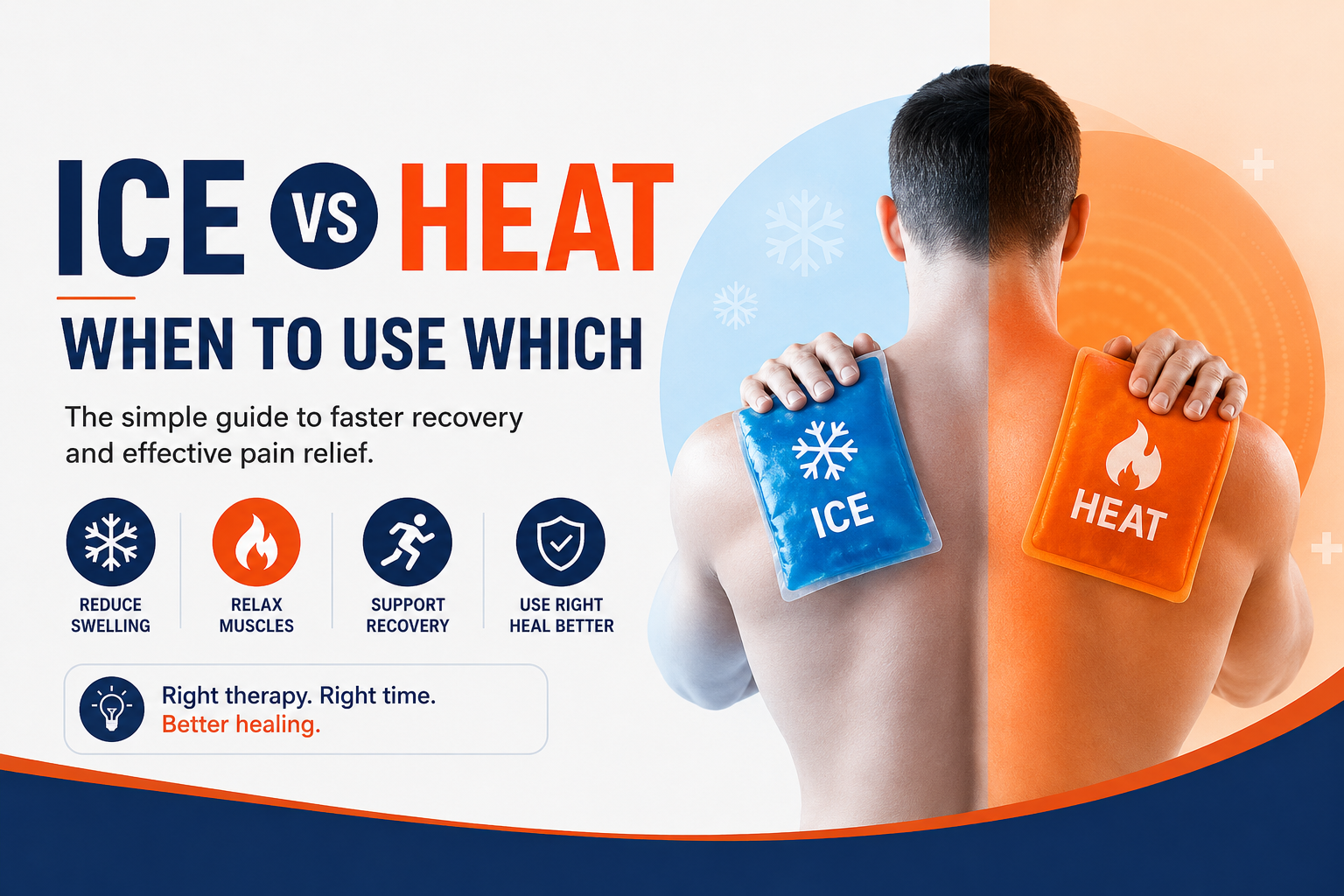

When you’re dealing with pain, swelling, or muscle soreness, one of the most common questions is: Should I use ice or heat?
While both therapies can help relieve discomfort, they serve different purposes. Using the right treatment at the right time can speed up recovery, reduce pain, and prevent further injury.
Here’s a simple guide to help you know when to use ice and when to choose heat.
When to Use Ice Therapy
Ice therapy is best for new injuries and inflammation. Cold helps narrow blood vessels, reducing blood flow to the injured area. This minimizes swelling, eases pain, and helps control inflammation.
Ice therapy is recommended for:
- Sprains and strains
- Swelling after an injury
- Sports injuries
- Post-workout inflammation
- Acute pain within the first 48–72 hours
Tip: Apply ice for 15–20 minutes at a time using a towel between the ice pack and your skin to prevent ice burns.
When to Use Heat Therapy
Heat therapy is ideal for muscle stiffness and chronic pain. Heat increases blood circulation, helping muscles relax and improving flexibility.
Heat therapy works well for:
- Muscle tightness
- Joint stiffness
- Chronic back or neck pain
- Before stretching or exercise
- Muscle spasms
Tip: Apply heat for 15–20 minutes to relax muscles and improve mobility.
Ice vs Heat: What’s the Difference?
| Ice Therapy | Heat Therapy |
|---|---|
| Reduces swelling | Relaxes tight muscles |
| Numbs pain | Improves blood circulation |
| Controls inflammation | Reduces stiffness |
| Best for fresh injuries | Best for chronic pain and muscle tension |
When to Avoid Both
Ice and heat therapy are not suitable for every situation.
Avoid using either therapy if you have:
- Open wounds
- Active infections
- Unexplained swelling
- Certain skin conditions
- Loss of sensation in the affected area
If you’re unsure about your injury or symptoms persist, consult a healthcare professional before starting treatment.
Final Thoughts
Ice and heat are both effective pain management tools—but only when used correctly.
As a general rule:
- Use ice for new injuries, swelling, and inflammation.
- Use heat for muscle tightness, stiffness, and long-term pain.
Choosing the right therapy at the right time can make recovery faster, more comfortable, and more effective. If pain continues or worsens despite home care, seek medical advice to determine the underlying cause and receive the appropriate treatment.